Journaling
Journaling has been a part of my life for many years. I began journaling in high school as a means to reflect spiritually and also motivate myself to accomplish goals and improve myself (and meet the impossible standards of my traumatized brain). During high school, I would write about how I am horrible, how I want to change, how I am going to change, why I should change, and resolve to do better. I was beating myself up constantly in a quest for perfection that could never be attained.
In college, I struggled emotionally. I had big feelings all the time. After age 18, I really could not cope with my negative feelings and thoughts. This was a milestone in my long mental health journey with depression and anxiety. In college, I wrote about my big negative feelings. At age 19, I broke down after a romantic relationship ended. My big negative feelings completely took over my life. I stopped going to class, started binge eating, failed a class in college, and gained about 70 pounds over a period of 2 years. It was difficult for me to express my despair to my friends and expressing it to my family was not an option. So I wrote. And wrote and wrote and wrote. You may think that I wish I had those journals so I could see how much progress I have made. You are wrong. The pain of that time was so intense...I can barely stand to write about it now because I relive all the deep, intense moments and feel them in my body.
In 2018, I began to feel the intense pain coming back, and I began writing about it again. In 2019, I started by personal development journey, and I began using journaling in a more impactful way. Before this time, journaling was a way to express my intense pain and grief. After learning from personal development gurus, I now use journaling to help me accomplish goals, live the life I want, cope with anxiety and depression, and continuously learn to make each day better.
Today, I do Rachel Hollis's process of writing 10 goals as though they already happened, then write how I will focus on the most important goal, then write all the ways I am grateful for the previous day. I also use Brendan Bruchard's High Performance Planner to prioritize and time block my day and learn from the previous day. Last, I write a list of affirmations, prayers, manifestations, and letters I have adopted from my readings, classes, and experiences.
This is a lot of journaling I know. I do about 30 minutes of jounaling each morning. On the weekends I do more. I know. This is a lot. It helps my mental clarity and attitude so much that it is worth it to me. If you don’t want to commit this amount of time, get started by Googling some journal prompts. Answer one of those per day. You can take as much or as little time as you want. Write just a word or sentence or keep going if you feel moved.
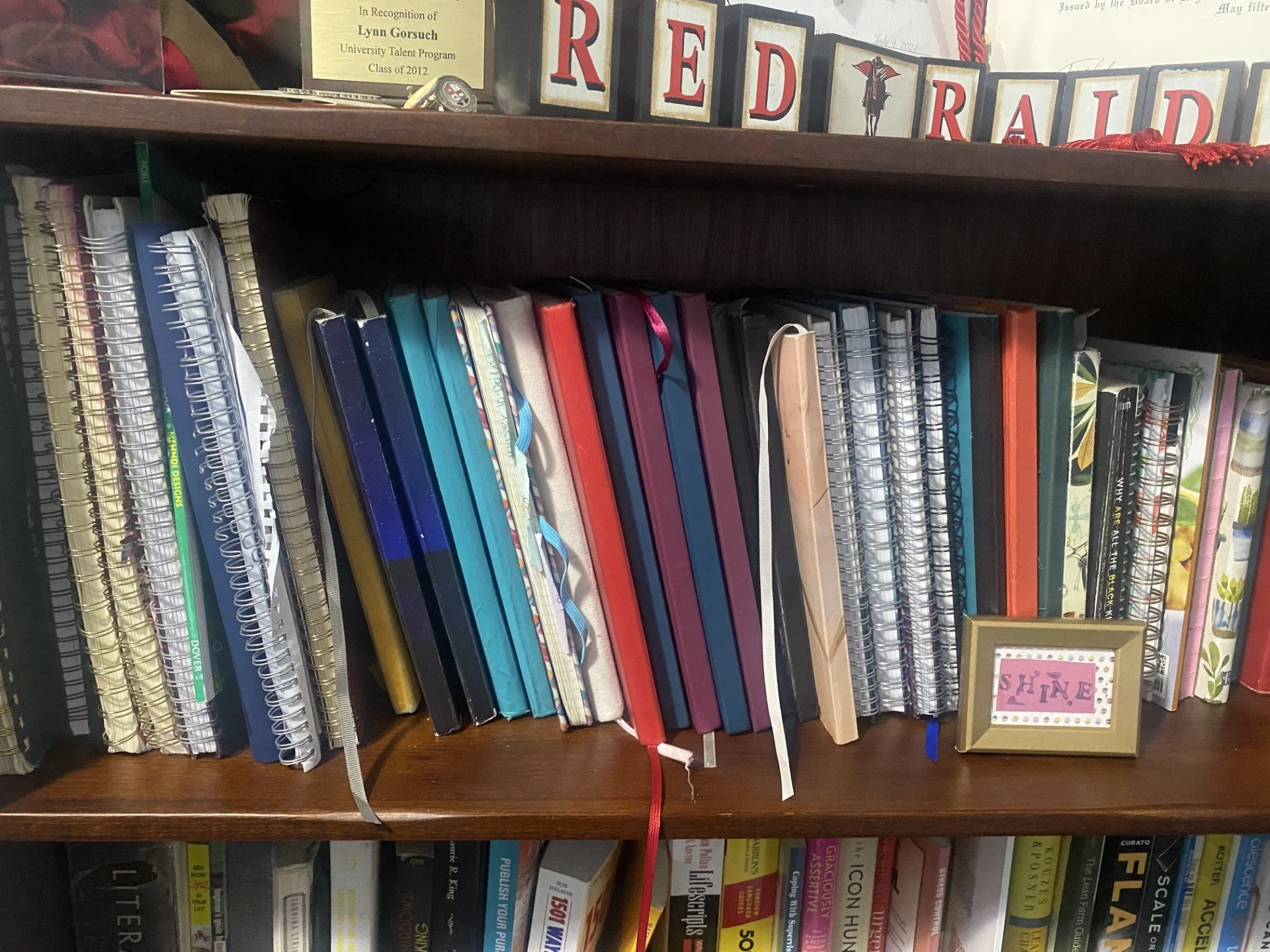
So many journals!