Heros from History
Here are two more stories from history. It is important to remember the horrors that the US has committed against People of Color (and continues to commit). It is also important to remember those that rose up against mistreatment, abuse, and disenfranchisement. People of Color are victims of a hate-based racist system, but they are also strong survivors with incredible resilience.
Elizabeth Key was born in 1630 to an enslaved woman and a white man named Thomas Key. As she was born out of wedlock, she was immediately placed into indentured servitude. Her indenture was transferred to a man named John Mottram. When he passed away, his family claimed that Elizabeth was enslaved, not indentured.
William Grinstead, a white former indentured servant who met Elizabeth previously, had completed his indentured period and began practicing law. He represented Elizabeth as she sued for her freedom. He argued that Elizabeth’s father was a free Englishman, and by English law, legal status such as freed or indentured was passed through the father’s line. He also pointed out that she was indentured 10 years passed her original date. She should have been freed when she was 15 years old. She lost the case, but petitioned the General Assembly. The case was investigated, and she won her freedom!
This occurred before the Civil War in Virginia, and the ruling was seen as a threat to those who used race as a fundamental reason for slavery. She was Black and had won her freedom in a fair legal court system! Unfortunately, her case was rare. There is another woman, named Elizabeth!, who also sued for her freedom and won in Massachusetts: Link here https://www.history.com/news/elizabeth-freeman-slavery-case-dred-scott-freedom
And now the story of Thomas Jennings. Thomas Jennings, a free Black man in New York City, opened a tailor and textiles business. Unhappy with the cleaning methods of the time, Thomas began experimenting in order to find a way to clean stains thoroughly without harming the clothes. He inventing a “dry scouring” process that is very similar to today’s dry cleaning methods. He applied for a patent and received it in 1821. This is significant because patents were only awarded to legal citizens of the United States. In effect, an agency of the US government was recognizing the full person-hood and contribution of a Black Man at a time wen race was being used in arguments and justifications across the country to enable slavery and abuse. Sadly, the original copy of the patent was lost by the US government in a fire 1836. Thomas used his business success to purchase freedom for other Black Americans and do abolition work. He supported the first Black-owned newspaper in the United States, and he died 6 years before the 13th Amendment ending slavery was ratified.
If you want to learn about another hero fighting against white supremacy, check out The Dollop Podcast Episode #276 about Harriet Tubman.
Sources:
· The Dollop Podcast Episode #276 by Gareth Reynolds & Dave Anthony
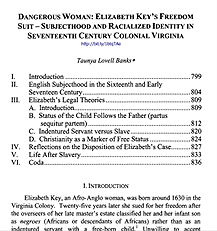
Great detailed information on Elizabeth Key’s freedom from a legal perspective.
· https://www.zinnedproject.org/news/tdih/elizabeth-key-wins-freedom/#:~:text=On%20July%2021%2C%201656%2C%20Elizabeth,white%20planter%20named%20Thomas%20Key.